Skip to content

Table of Contents
Dark spots, patchy tone, and the marks left behind by old breakouts all respond to treatment, though rarely to the same one. At Gizel Atlanta, the most effective hyperpigmentation treatment plans usually combine laser therapy, medical-grade chemical peels, and microneedling, selected around what is driving the discoloration and how your skin tends to react to it.
This guide covers the hyperpigmentation treatment options available here, who each one tends to suit, and what most patients can realistically expect over time.
Which hyperpigmentation treatments work best for patients in Atlanta?
The strongest results typically come from laser therapy, medical-grade chemical peels, or microneedling, chosen based on the type of pigment involved and your skin tone. Most patients see the best outcome from a combined plan built during a professional skin assessment rather than from a single treatment.
What Causes Hyperpigmentation, and Why It Lingers in Atlanta
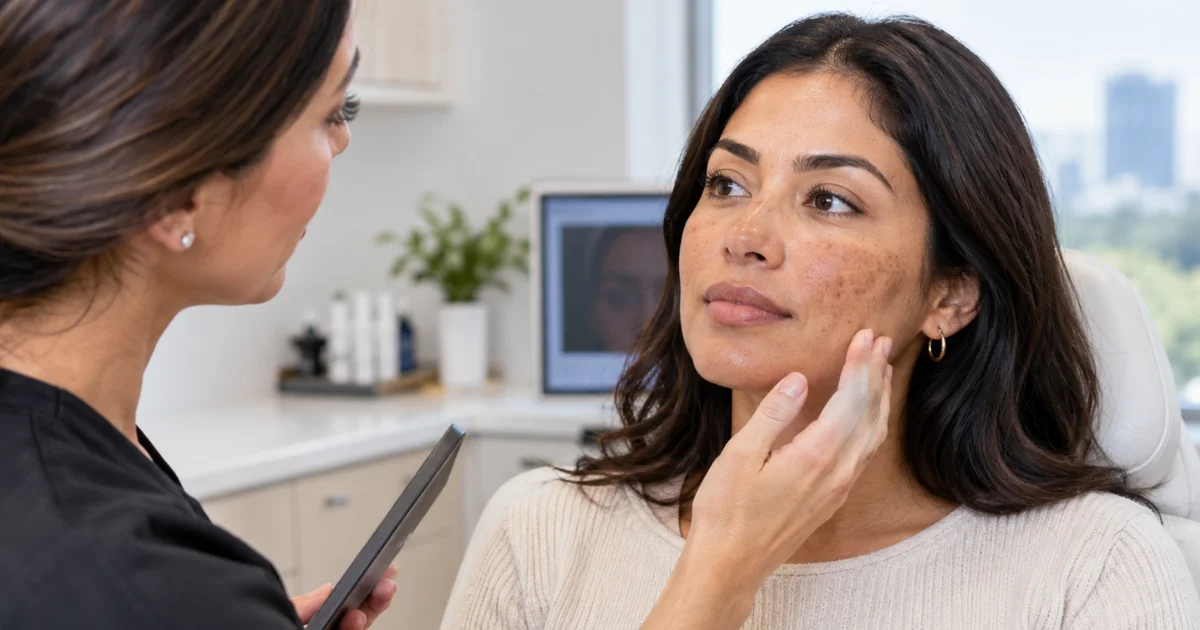
Hyperpigmentation develops when skin produces excess melanin in response to a trigger, and that trigger shapes the entire treatment path. Three patterns show up most often: post-inflammatory hyperpigmentation, the dark marks left behind after a pimple heals; melasma, which is hormonally influenced and tends to appear as broader patches across the cheeks and forehead; and sun spots from years of accumulated UV exposure.
Atlanta keeps all three active. The UV season runs long, warm weather pulls people outside from March through October, and daily light exposure through car windows on I-285 quietly reactivates pigment well after summer ends. Useful dark spots treatment starts with identifying which pattern you actually have.
Why Your Skin Tone Changes Which Treatment Is Right
Your skin tone determines what is appropriate before any device or peel is selected. Providers use the Fitzpatrick scale, a classification from I (very fair) to VI (very dark), to assess how skin is likely to respond to light-based and resurfacing treatments.
Deeper skin tones carry a higher risk of rebound pigmentation when a treatment is too aggressive, meaning the skin darkens again in response to the treatment itself. No pigment treatment is suitable for every skin tone, and any provider who says otherwise is overselling. This is why candidacy is assessed in person, on your skin, before anything gets scheduled.
Laser Treatment for Hyperpigmentation in Atlanta
Laser therapy is often the most direct route for sun spots treatment and general uneven skin tone treatment. Our practice uses the Aerolase® Neo Elite and the Aerolase® Era Elite, which deliver energy that targets concentrated pigment in the skin while leaving surrounding tissue largely undisturbed. That precision is part of why laser-based hyperpigmentation treatment in Atlanta, GA has become a common starting point for patients with sun-driven discoloration.
Melasma is approached more conservatively, since heat can sometimes provoke it. Most patients need a series of sessions rather than one, with improvement appearing gradually over weeks. Downtime is generally limited, though mild redness is common, and treated spots often darken briefly before they flake away and fade.
Chemical Peels for Post-Acne Marks and Uneven Tone
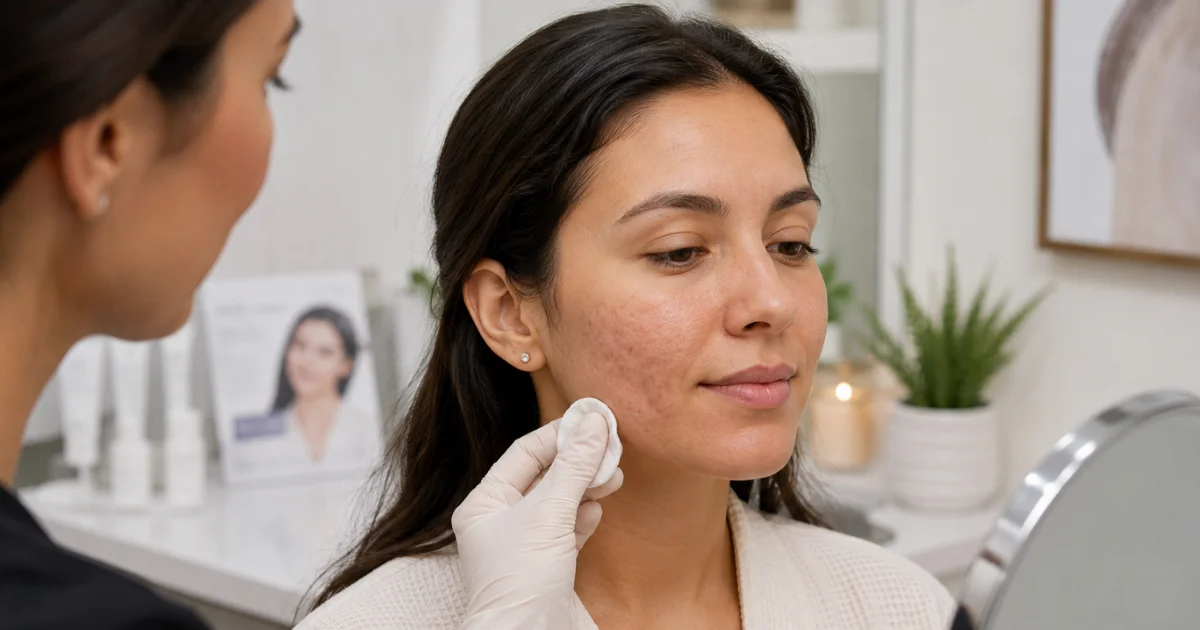
Medical-grade chemical peels remain one of the most practical answers for acne hyperpigmentation. A peel works through controlled exfoliation, lifting pigmented surface cells and prompting faster turnover so newer, more even skin comes forward.
Peel depth and formulation are chosen by skin type and pigment pattern, never applied uniformly across every patient. For post-acne marks, a peel series is frequently the first step, sometimes used alongside other treatments later. Worth noting: a peel is minimally invasive rather than non-invasive, because it deliberately disrupts the skin barrier to create that turnover.
SkinPen® Microneedling When Texture and Discoloration Overlap
Microneedling makes the most sense when pigment sits alongside texture problems. SkinPen® Precision creates controlled micro-injuries that prompt the skin’s own repair response, which can soften both discoloration and the shallow scarring left by past breakouts.
Our practice pairs SkinPen® microneedling with VAMP for patients who fit that profile. Results build across multiple sessions rather than appearing right away, and most patients notice tone and texture improving together rather than one before the other.
Where Facials and Daily Skincare Fit Into the Plan
Facials and home care hold results, though they rarely correct pigment on their own. Custom HydrafacialMD treatments and our Signature Facials support clarity and hydration between clinical sessions, keeping skin calm while a longer plan does the heavier work.
Daily SPF is the part patients skip most and regret most. Sun exposure reverses progress faster than any treatment builds it, which is why consistent protection is non-negotiable during and after any course of pigmentation removal. Medical-grade topicals help maintain gains between visits.
How Your Provider Builds the Right Plan for Your Skin
A proper assessment comes before treatment selection, not after. Through DermaVision Planning in our office, or Derm360 Virtual Skincare Planning for patients who prefer to start remotely, we look at pigment type, Fitzpatrick type, medical history, how your skin has reacted to past treatments, and what you are currently using at home.
Most plans sequence two or three approaches rather than relying on one. Realistic timing is part of that conversation: pigment typically improves over several months, and maintenance continues afterward. Results vary from patient to patient, which is why the plan is built around your skin rather than a standard protocol.
Common Questions About Hyperpigmentation Treatment in Atlanta
How long does it take to see results?
Most patients notice visible change within four to eight weeks, with continued improvement over several months.
Will the dark spots come back?
They can, particularly with ongoing sun exposure or hormonal shifts. Daily SPF and periodic maintenance sessions help hold results.
Is laser treatment safe for deeper skin tones?
Certain laser technologies are better suited to deeper skin tones than others. Your provider assesses candidacy individually before recommending any device.
Can melasma be permanently removed?
Melasma is managed rather than cured. Most patients maintain meaningful improvement with a consistent plan and sun protection.
Ready to See Your Skin More Evenly Toned?
The best dark spots treatment in Atlanta is the one matched to your pigment type and skin tone, which is why the most reliable next step is a professional assessment rather than guessing at products.
When you are ready, our team will look closely at what is driving your discoloration and walk you through the options that fit. Book a Personalized Hyperpigmentation Treatment in Atlanta